
Quick Answer: Caring for hardwood floors in a rental means protecting the finish without changing the floor. Sweep often, mop with a barely damp cloth and a wood-safe cleaner, and put felt pads under every furniture leg. Most leases allow all of that. Sanding, waxing, and anything involving adhesive need written approval first.
Wood floors are the first thing a guest notices and the first thing a move-out inspector checks. Caring for hardwood floors in a rental is mostly restraint, because the products you skip matter more than the ones you buy. Our homes at Hickory Apartments in Garland, TX have hardwood floors, so here is what residents can do freely and what puts a deposit at risk.
What Hardwood Floor Care Looks Like in a Rental
Hardwood floor care in a rental comes down to four habits. Keep grit off the surface. Keep standing water off it. Stop furniture legs from gouging it. Hold the room's humidity steady. None of those need permission or much money, and all four protect the finish, which is the layer landlords actually charge for.
Everyday hardwood floor care that protects the finish
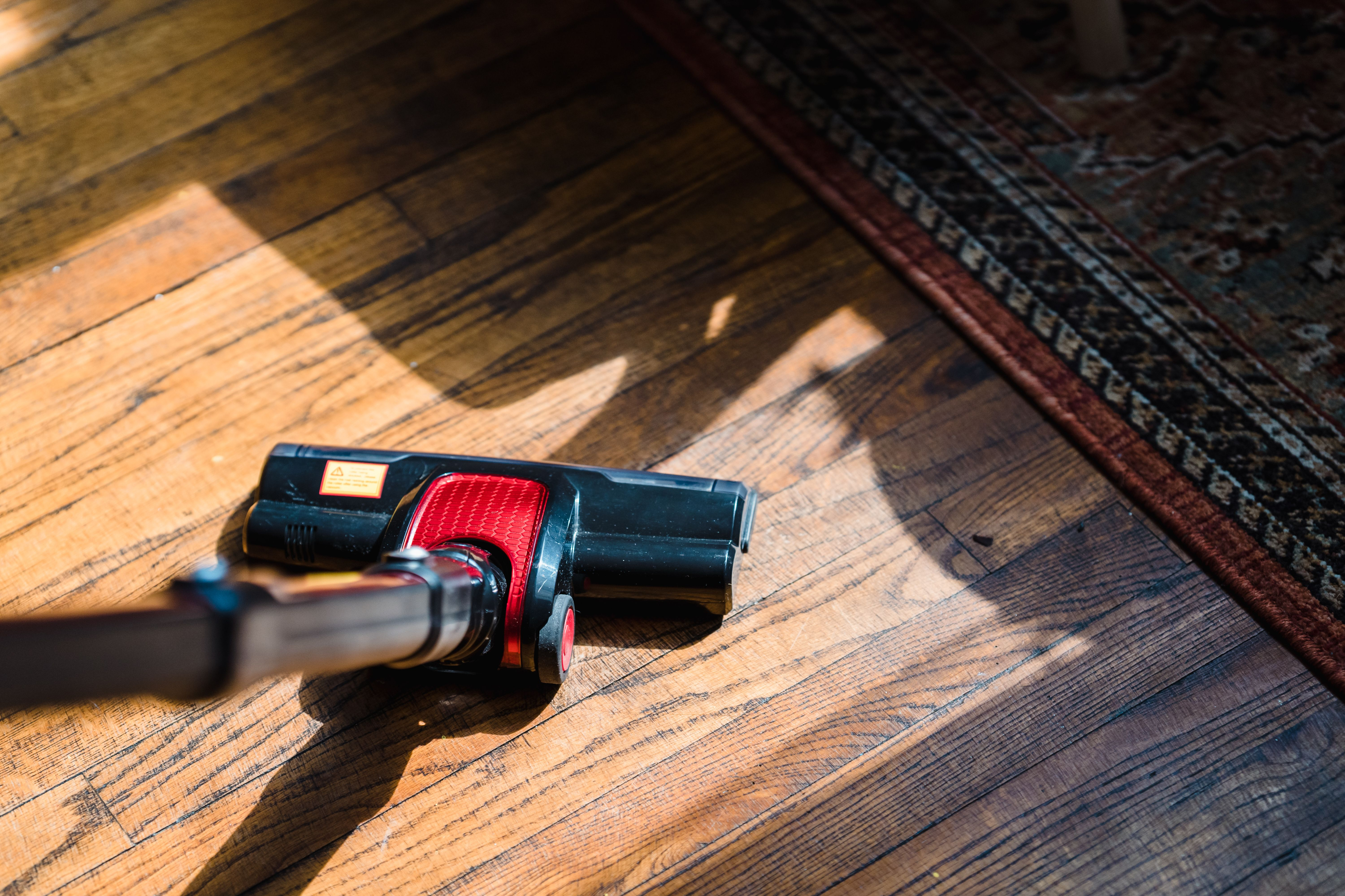
Sweep or dust daily, vacuum weekly with the beater bar switched off, and use a wood floor cleaner about once a month. That is the rhythm the National Wood Flooring Association publishes, and it works because most scratching is done by grit underfoot.
Wipe spills right away. Water sitting in a seam for an afternoon does more harm than a month of foot traffic.
Four things belong nowhere near a rented floor:
- Steam mops and wet mops. The NWFA warns that both cause more damage over time, since steam drives moisture through the seams into the wood.
- Vinegar and acidic mixes. Popular online, hard on a polyurethane finish, slow to show the dulling.
- Wax, polish, and restorer coatings. The residue must be stripped before recoating, and stripping is billable.
- Oil soaps. Same residue problem, plus a film that traps dirt.
The EPA lists certified floor care through its Safer Choice product search. Match the cleaner to your finish, not the strongest bottle on the shelf.
Hardwood floor protection that costs almost nothing
Felt pads under every chair and table leg are the highest-value purchase a renter can make, and the NWFA recommends them. Check them twice a year, since grit works into felt and turns a pad into sandpaper.
Put a walk-off mat at the entry, then add area rugs where traffic concentrates. The rug is rarely the problem. The backing is. Rubber-backed and latex-backed mats can react with a finish and leave discoloration that will not buff out, so use a felt pad under anything you lay down.
Two habits round out real hardwood floor protection. Trim pet nails on a schedule, since wood handles pets well but nails dent it. And keep heels and sports cleats off the wood, as the NWFA advises.
Humidity matters more than renters expect. The NWFA asks for 30% to 50% humidity and 60 to 80 degrees Fahrenheit year-round, and the EPA recommends staying below 60% and ideally in that same band in its guidance on indoor moisture. Wood cups in wet air and gaps in dry air. Running the AC through a Texas summer handles most of it.
What Do Lease Flooring Rules Usually Allow?
Lease flooring rules sort into three buckets: routine care you can do today, changes that need written approval, and alterations that are almost never approved. Permanence is the dividing line. If it can be undone in an afternoon with no trace left behind, it is usually fine. If it changes the floor itself, ask first.
| What you want to do | Usually allowed? | What to check first |
|---|---|---|
| Sweeping, dusting, damp mopping with a wood-safe cleaner | Yes | Nothing. This is expected care. |
| Felt pads, entry mats, area rugs | Yes | The backing. Rubber and latex can discolor the finish. |
| Waxing, polishing, or applying a restorer coating | No | Residue must be stripped before recoating. That is billable. |
| Sanding or refinishing the floor yourself | No | Management's job. Doing it yourself is an alteration. |
| Peel-and-stick planks or a floating floor over the wood | No | Adhesive and trapped moisture leave permanent marks. |
| Reporting a gouge, deep scratch, or water damage | Yes, and do it early | A maintenance request creates a dated record. |
Some leases carry a floor covering requirement, written as a percentage of the living area that has to sit under rugs, to cut noise reaching the home below. Read yours rather than assuming.
Apartment flooring is also not always solid wood. Engineered planks and wood-look surfaces are common, and they take different cleaners. Our photo gallery shows how the finish reads in daylight, and the office can confirm what is in your unit.
How Does Hardwood Floor Damage Affect Your Deposit?
Hardwood floor damage only reaches your deposit once it passes normal wear and tear. Texas law draws that line for renters here. Dulling and light scuffing from ordinary living sit on the landlord's side of it. Gouges, burns, pet stains, and water damage from a spill left to sit generally sit on yours.
Section 92.001(4) of the Texas Property Code defines normal wear and tear as deterioration from the intended use of a dwelling, and excludes deterioration caused by negligence, carelessness, accident, or abuse. Section 92.104 says a landlord may not retain any part of a deposit to cover it, and requires a written itemized list of deductions. Both sit in Chapter 92.
Floor damage deposit disputes and what actually protects you
Timing is the other half of the law. Section 92.103 gives a landlord 30 days after you surrender the premises to refund the deposit, and Section 92.107 ties that to a written forwarding address from you. Section 92.109 covers deposits held in bad faith.
Three habits stop a floor damage deposit argument before it starts:
- Photograph every floor at move-in and again at move-out, with the date visible.
- Report water damage the day it happens. A leak logged in month three is maintenance. The same leak found at move-out looks like neglect.
- Leave repairs alone. A touch-up usually costs more to correct than the original mark.
Frequently Asked Questions
1. Can I use a steam mop on hardwood floors in an apartment?
No. The National Wood Flooring Association warns that wet mops and steam mops cause more damage over time. Steam pushes moisture into the seams, where it swells the boards and lifts the finish. A microfiber mop wrung out until it is barely damp does the same cleaning job safely.
2. Are apartments with hardwood floors harder to maintain than carpet?
Not harder, just different. Apartments with hardwood floors need daily sweeping instead of weekly vacuuming, and they punish standing water in a way carpet does not. In exchange they do not trap dust, and they rarely trigger the full replacement charges that stained carpet can.
3. What hardwood floor tips matter most for renters with pets?
Four hardwood floor tips carry most of the weight in a home with animals:
- Trim nails on a schedule, since nails cause most pet dents.
- Wipe up accidents immediately, because urine penetrates a finish faster than water.
- Keep a mat under food and water bowls.
- Run a rug along the route your dog takes to the door.
4. Will my landlord charge me for scratches on the floor?
Light surface scratching from ordinary use is normally treated as wear and tear, which Texas law says cannot be deducted from a security deposit. Deep gouges are a different category, and so is damage from moving furniture without pads. Any deduction has to arrive as a written itemized list.
5. Can I put down peel-and-stick flooring over the hardwood?
Assume no unless you have written approval. Adhesive planks pull up finish when removed, and anything laid tight over wood traps moisture against it. Area rugs with felt pads give you the same look change, cost less, and leave nothing behind when you move out.
Conclusion
Caring for hardwood floors in a rental is a short list done consistently: sweep, keep water off, pad the furniture, and leave the finish alone. Nearly every move-out charge traces back to a product that should never have touched the floor, or a spill nobody reported.
Want a Garland home with wood floors already in place? Browse our one and two bedroom floor plans or start an application.